ISPM 15 Heat Treatment, Done In-House
Why export loads need treated wood, how to read the IPPC mark, and what changes when your pallet supplier runs its own chamber.
PDF DownloadIf your product leaves the country, the wood under it has to be treated and marked. We do both here in Clinton — the same shop that builds your pallet treats it and stamps it.
One of the few manufacturers in the region treating and marking in-house.
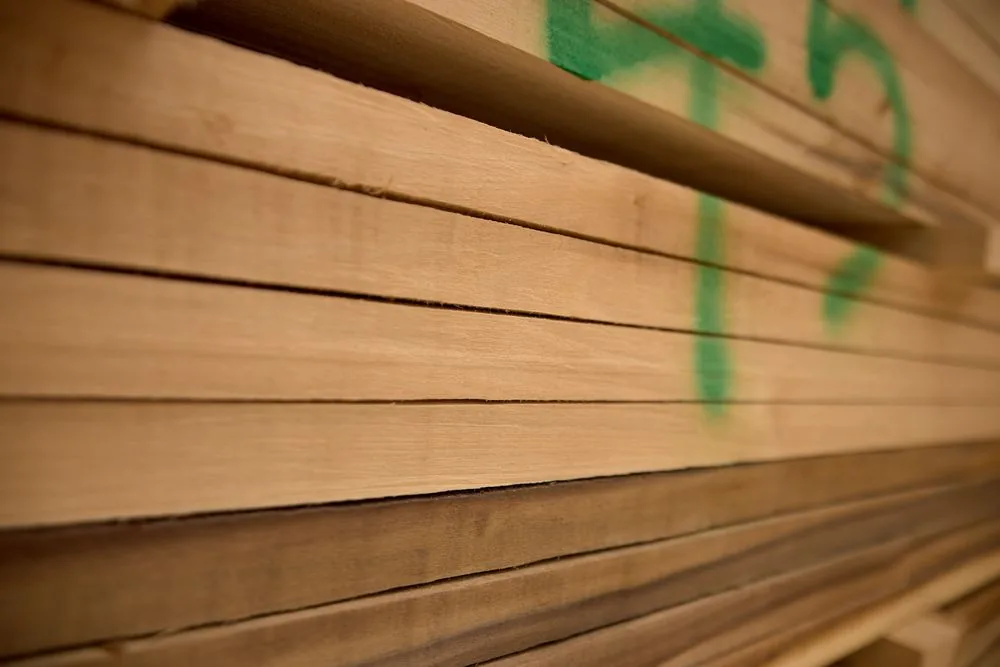
ISPM 15 is the international phytosanitary standard for wood packaging moving across borders. Its purpose is to keep wood-boring pests from hitching a ride between countries. In practice it means two things: the wood gets heat treated to a set schedule, and it carries a permanent mark proving it.
Pallets, crates, cases, skids, dunnage, and blocking and bracing — anything cut from solid lumber that travels with your freight. The rule reaches well past the pallet under the load.
Manufactured panels such as plywood, OSB, and particleboard, since the manufacturing process itself removes the pest risk. Confirm it against your destination rather than assuming it.
Only a facility treating under an accredited national program may stamp wood packaging — ours is audited by Timber Products Inspection. It cannot be added afterward by a shipper, a broker, or anyone downstream.
Most pallet suppliers this size send wood out to a third-party chamber, or simply don't offer treated product at all. We run our own, which changes what you can ask for and how fast you get it.
Your wood never leaves our yard to wait in someone else's treatment schedule. Build and treatment run under one roof, on one timeline.
Custom crates, skids, and odd footprints get treated at the size you ordered. The treatment step doesn't put limits on the design.
The people who built the pallet applied the mark. If a customer or an inspector has a question about it, you call the shop that made it — not a broker who'll call someone else.
Our facility code is issued under the accredited program and audited by Timber Products Inspection with unannounced inspections.
Run treated export packaging alongside untreated domestic pallets, from the same supplier, on the same delivery.
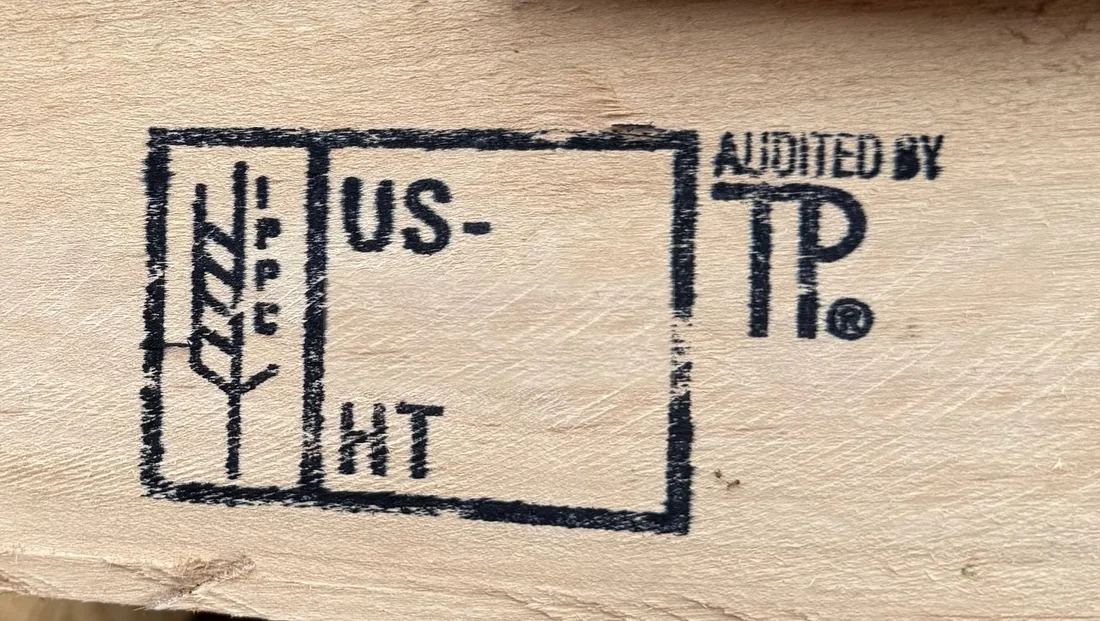
Every pallet, crate, and skid we treat carries this stamp, applied here in Clinton. Marks vary in shape and placement between facilities, but each element means something specific — and yours should be legible when the freight lands.
The international mark for wood treated under an accredited national program — not by whoever had a kiln handy.
The ISO country code plus the code assigned to the treating facility. Ours identifies this shop as the one that performed the treatment; the digits shown here are a placeholder.
Heat treatment. The alternative, MB, is methyl bromide fumigation, which is restricted in many markets.
Timber Products Inspection, an ALSC-accredited agency, monitors the program with unannounced inspections. The mark isn't self-certified.
These get used interchangeably on purchase orders, and they aren't the same thing. Kiln-dried lumber is not export compliant on its own.
| Factor | ISPM 15 heat treatment (HT) | Kiln drying (KD) |
|---|---|---|
| Purpose | Phytosanitary — eliminates wood-boring pests in the lumber. | Moisture control — brings lumber to a target moisture content. |
| Requirement | The wood must reach the time-and-temperature schedule the standard specifies. | Dried until the moisture target is met. No pest schedule is implied. |
| What you see | The IPPC mark: symbol, country code, facility code, and the HT treatment code. | A mill or grade stamp — not the IPPC mark, and not proof of compliance on its own. |
| Export status | Accepted when the wood carries a legible IPPC mark. | Not sufficient on its own. It qualifies only if it also met the ISPM 15 schedule and was marked. |
No. ISPM 15 applies to wood packaging crossing an international border. Pallets that stay inside the United States don't need to be treated or marked — and paying for treatment you don't need is a real cost on a large order. Tell us where the freight is going and we'll spec it accordingly.
Often, yes. If your product is repacked or forwarded overseas on the pallet you supplied, that wood is regulated at the border even though you never shipped it internationally yourself. It's worth asking your customer directly — this is the single most common way a domestic shipper gets caught out.
Yes. Crates, cases, skids, dunnage, and blocking and bracing are all regulated wood packaging, and all of it can be treated and marked here. Because we build and treat on the same site, custom crate work doesn't have to be sized around somebody else's chamber.
It depends on the destination country, and none of the outcomes are cheap: the shipment can be held, treated at your expense, re-exported, or destroyed — with your product sitting still the entire time. Treatment is the least expensive line on the shipment. The delay is not.
Yes, and most of our export customers do exactly that. Treated stock for the overseas lanes, standard pallets for everything domestic, one purchase order and one delivery.
Written for purchasing, warehouse, and logistics crews — plain language, one page, no sign-up. Download and pass them around.
Why export loads need treated wood, how to read the IPPC mark, and what changes when your pallet supplier runs its own chamber.
PDF DownloadThe full background guide — what the standard covers, what the mark means, and why kiln drying is not the same thing.
PDF DownloadHow specs, cost, and paperwork differ between a pallet that stays home and one that clears a border.
PDF DownloadGeneral education only. ISPM 15 requirements and exemptions vary by destination country and change over time. Confirm current requirements with your destination country, customer, carrier, or packaging specification — and with your Pallets Plus representative.
Send your destination, your load, and your volume — we'll come back with pricing and lead time on treated, marked, export-ready packaging. Prefer the phone? (865) 457-4800 reaches the shop directly.