How to Choose the Right Pallet
The seven inputs that decide whether a pallet fits the job — dimensions, weight, handling, storage, and destination.
PDF DownloadMillions of custom wooden pallets built in Clinton, Tennessee — with vendor managed inventory and just-in-time delivery that keep your line moving.
Every order runs through the same shop in Clinton. Tell us your load, your racking, and your dock, and we'll build to it.
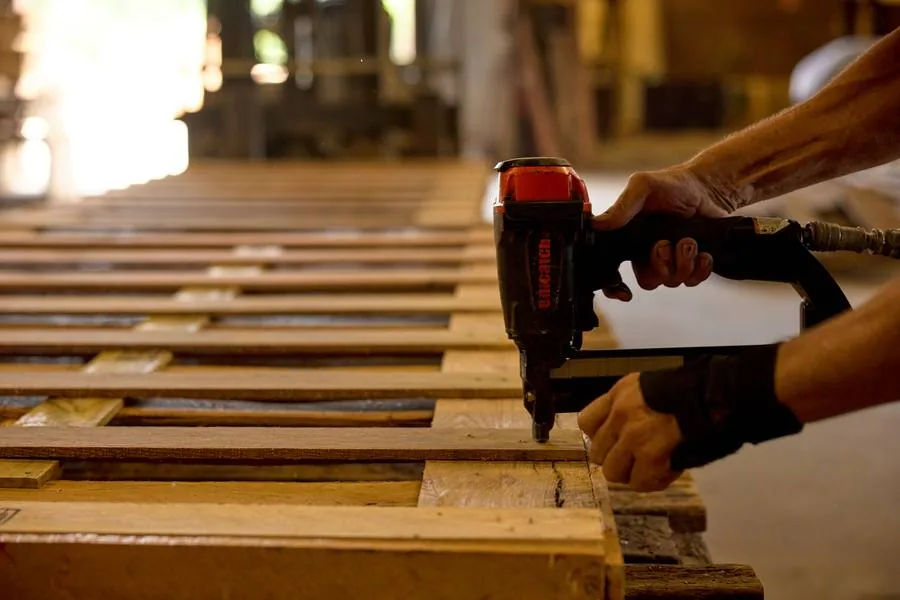
From standard 48x40 GMA footprints to purpose-built designs matched to your load rating and handling equipment. Our specialty since 1981 — millions built and counting.
Spec yours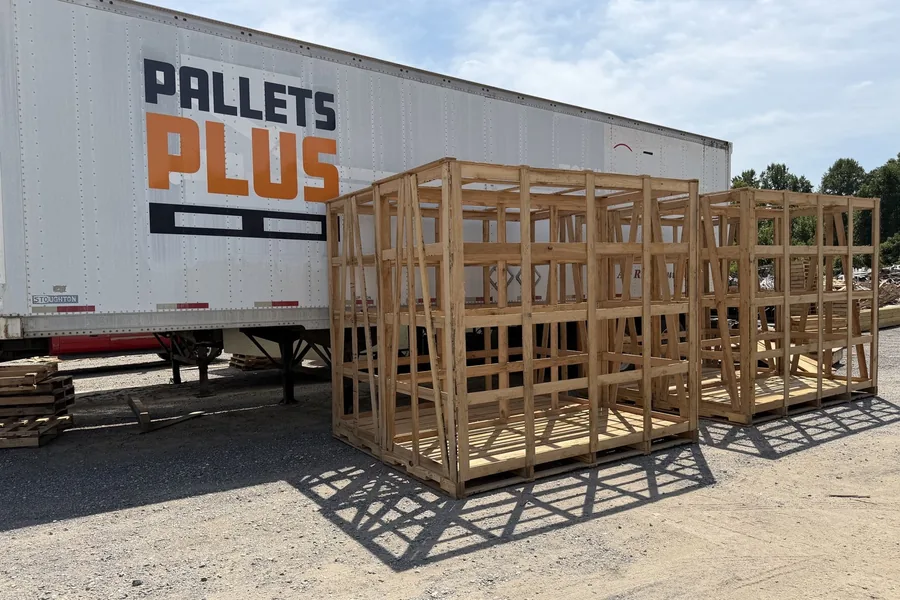
When a shipment needs containment, not just a deck — skidded bases, interior blocking and bracing, and ISPM 15 treatment for export. Built to your contract's packaging spec.
Spec a crate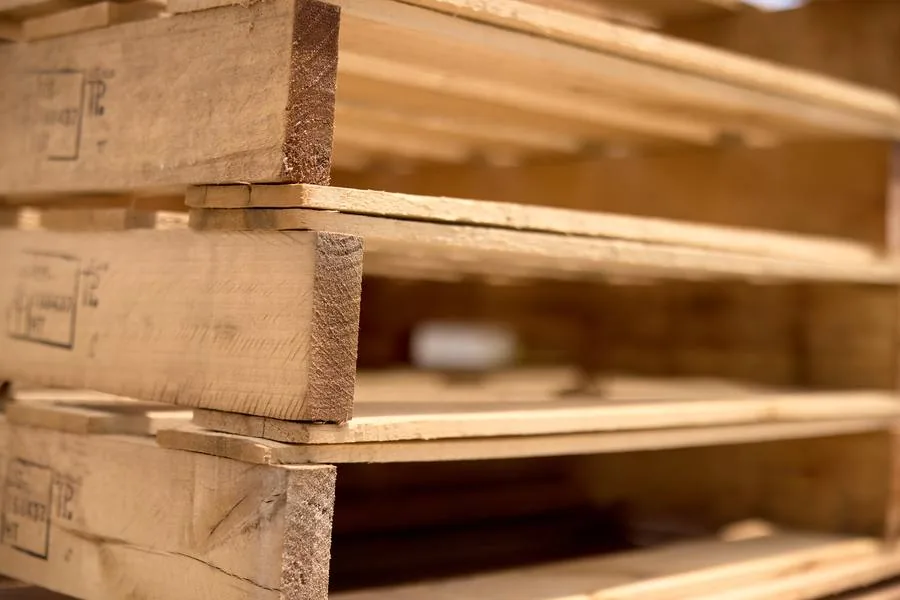
We stock, monitor, and replenish your pallet supply for you — with just-in-time delivery on your schedule, so you never tie up floor space or run short mid-shift.
Set up a VMI programFour and a half decades building pallets for East Tennessee manufacturers — not a broker, not a middleman. One shop, one standard.
We run our own heat treat chamber under our own IPPC facility code — one of the few manufacturers in the region able to supply export-compliant wood packaging without sending it out. How it works
Call the shop and you reach decision-makers, not a call center. Specs, changes, and rush orders get answered same-day.
We track, stock, and replenish your pallets for you — just-in-time delivery tuned to your production schedule, inventory off your floor.
We monitor lumber markets continuously so pricing stays sharp — and relationships here run in decades, not orders.
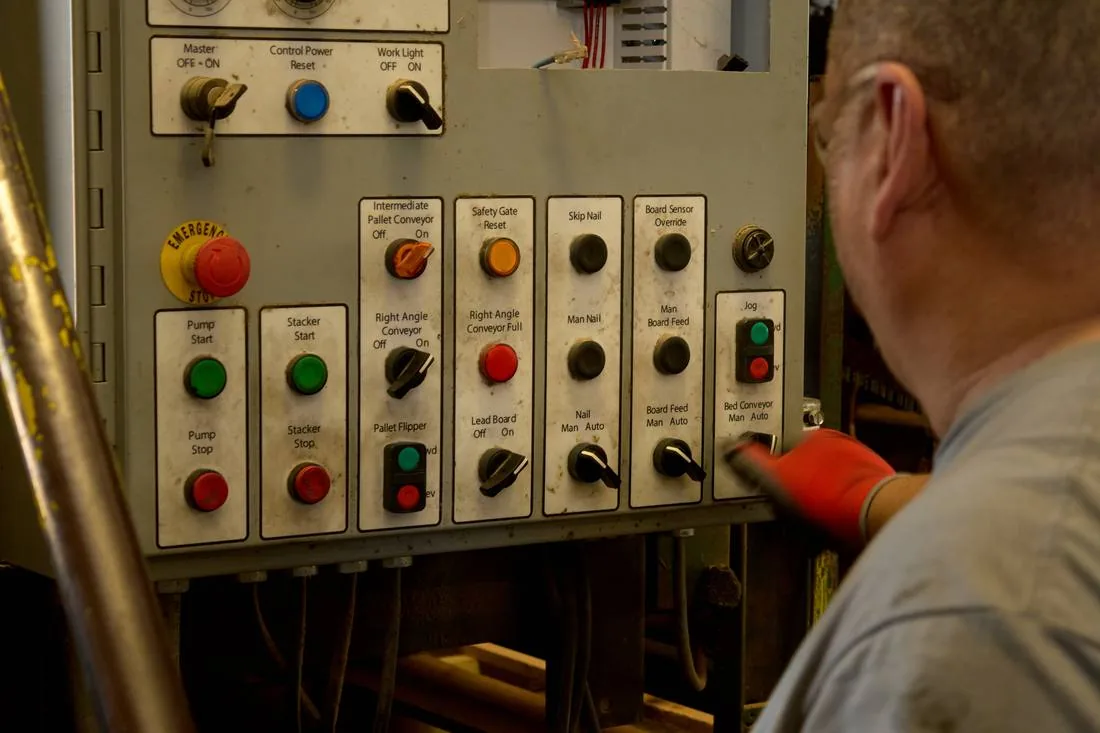
All of East Tennessee, plus delivery into Kentucky, Virginia, North Carolina, and Georgia. Tell us where you need pallets and we'll work out the rest.
Free one-page guides written for purchasing, warehouse, and logistics teams — the questions we get asked most, answered plainly. Download and share them with your crew.
The seven inputs that decide whether a pallet fits the job — dimensions, weight, handling, storage, and destination.
PDF DownloadConstruction differences, fork and pallet-jack access, and when each style is the right call.
PDF DownloadWhy this footprint became the default, how it is built, and when a nonstandard size is the better buy.
PDF DownloadThe six variables — footprint, deck spacing, lumber thickness, stringers, blocks, fasteners — and how each is chosen.
PDF DownloadWhat the botanical labels do and do not tell you about strength, weight, and pallet performance.
PDF DownloadNails, staples, and screws compared on holding power, production speed, and repairability.
PDF DownloadWhat kiln drying, fungicide dips, coatings, and remediation each actually do about mold.
PDF DownloadHow storage changes a pallet's moisture and weight after drying and treatment — and what does not change.
PDF DownloadThree different load conditions, and why a pallet that works on the floor can fail in a rack.
PDF DownloadOverhang, underhang, point loads, and off-center placement — and the damage each one produces.
PDF DownloadTwo-way, partial four-way, and full four-way entry, and why pallet jacks need clearance forks do not.
PDF DownloadPractical criteria your team can apply at the sort line to decide what stays in service.
PDF DownloadSix handling and storage habits that account for most of the gap between fleets.
PDF DownloadStandards, testing, and design research behind modern pallet and unit-load performance.
PDF DownloadWhy export loads need treated wood, how to read the IPPC mark, and what changes when your supplier runs its own chamber.
PDF DownloadWhat the IPPC mark means, when export shipments need it, and why kiln drying is not the same thing.
PDF DownloadCleanliness, moisture and mold control, repair limits, and why no wood pallet is “food grade” on its own.
PDF DownloadTreatment, marking, transit duty, and the fumigation misconception, side by side.
PDF DownloadWhen a shipment needs an engineered crate, a skidded base, and interior blocking and bracing.
PDF DownloadWhat each mark burned into a pallet certifies — and what it does not.
PDF DownloadWhy pallet footprints differ by region, and what to confirm before an international shipment.
PDF DownloadThe inputs behind a quote, and which of them move week to week.
PDF DownloadA buying decision, not a quality ranking — when each one is the lower total cost.
PDF DownloadNew, Grade A, and Grade B side by side — prior service, lumber, stringer condition, appearance, and when each is the right buy.
PDF DownloadReuse, repair, remanufacturing, and end-of-life recovery of pallet wood.
PDF DownloadThe costs around a pallet — damage, downtime, chargebacks — that outweigh its unit price.
PDF DownloadHow a managed stocking program removes reorder work, stockouts, and excess inventory.
PDF DownloadGeneral education only. These guides explain common industry practice. Pallet selection and performance depend on your application, load, handling method, storage conditions, and customer requirements — and export, food, and regulated shipments carry their own rules. Contact Pallets Plus for guidance specific to your operation.
Send your specs — or just describe the load — and we'll come back with pricing and lead time. Prefer the phone? (865) 457-4800 reaches the shop directly.